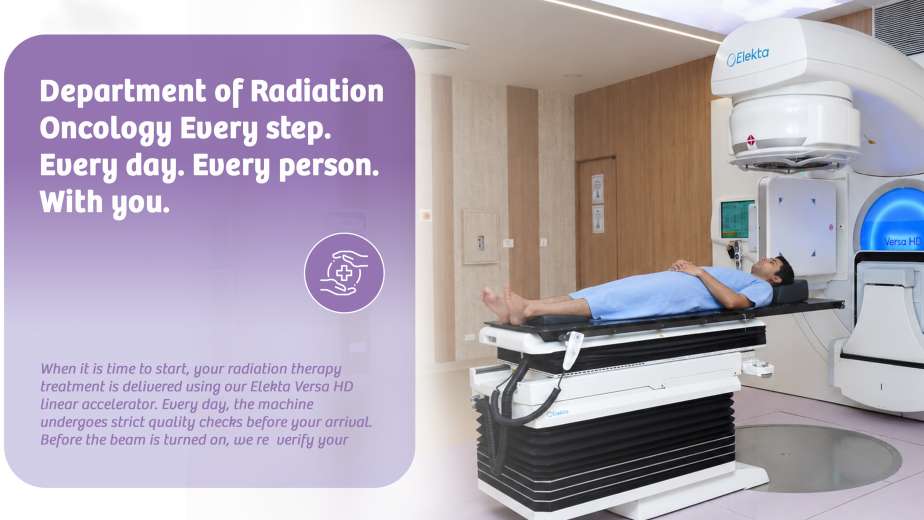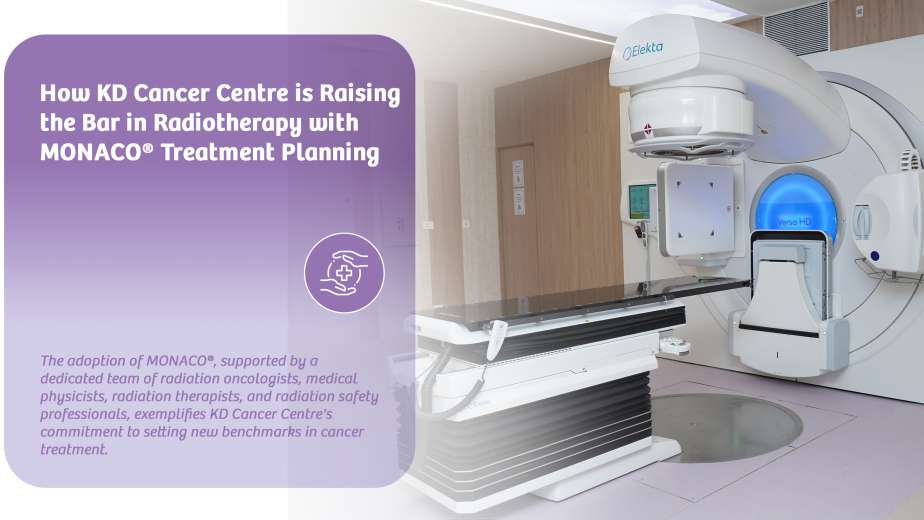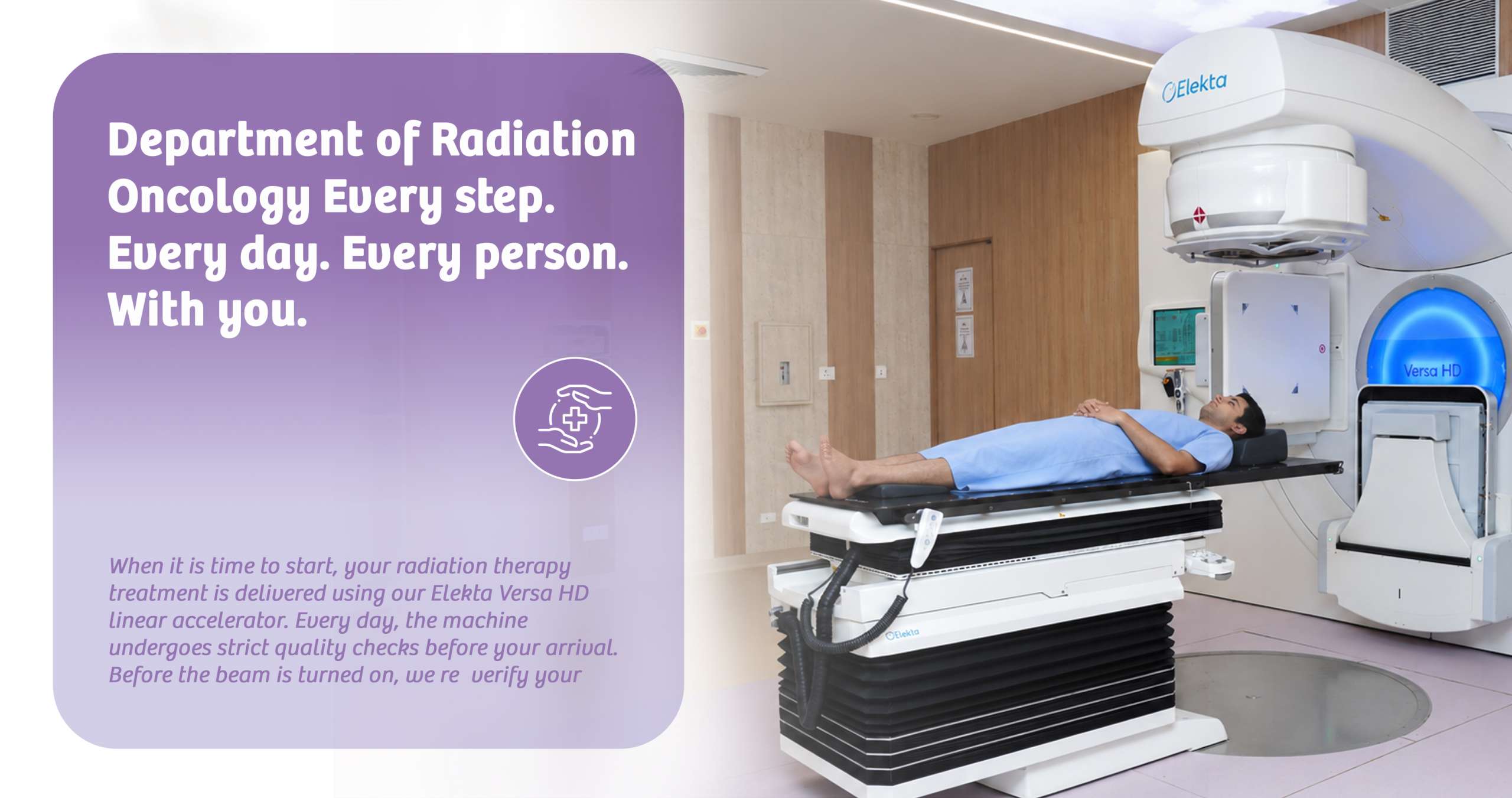
Advanced radiation treatment is already part of cancer care today. Modern imaging, advanced treatment machines and precision planning software help specialists deliver radiation therapy with greater accuracy, targeting tumours while limiting exposure to nearby healthy organs. At KD Cancer Centre, these technologies are integrated with surgical and medical oncology expertise, enabling a multidisciplinary team to plan personalised treatment strategies for each patient. The field will continue to improve, but progress is not only about what machines can do. It also depends on the judgment, experience and care of the people who plan and deliver treatment.
From treatment fields to personalised planning
Radiotherapy has changed as imaging and computing have improved. Advanced imaging helps clinicians assess a tumour’s size, shape and location, enabling more precise treatment planning. This helps the team direct radiation where it is needed and limit exposure to nearby healthy tissue. Adverse effects are still possible, and the risks vary with the cancer and the treatment.
Today, radiation oncology teams may use a combination of techniques and tools, depending on the patient’s needs:
- 3D and 4D imaging to map tumours and, where relevant, understand movement with breathing
- Intensity-modulated radiation therapy (IMRT), which varies the beam to shape the dose around the treatment area
- Image-guided radiation therapy (IGRT), which uses imaging to check positioning before or during treatment
- Stereotactic radiosurgery and body radiotherapy (SRS/SBRT), highly focused treatments used for selected tumours
- Adaptive radiotherapy, where available and appropriate, which can help the team revise a plan when anatomy changes during treatment
What these advances can mean for patients
Detailed imaging, careful planning and precise delivery give clinicians more ways to tailor radiation treatment. In some situations, this can help limit the dose reaching nearby organs. It does not guarantee fewer side effects or a better outcome for every patient: benefits and risks depend on the tumour, the treatment plan and the person’s overall health.
Some patients may also be suitable for a shorter course of treatment. For example, SBRT can treat certain cancers over a small number of sessions. Many patients still need other schedules, and the team chooses an approach based on what is clinically appropriate, not simply what is fastest.
“The technology gives us more information and more ways to plan treatment, but it is the people behind it who make the decisions,” said a senior radiation oncologist at KD Cancer Centre. “We look at each patient’s diagnosis, overall health and priorities, and work with colleagues across cancer care to recommend a plan that fits.”
The Onco teams behind the technology
A treatment machine and its software are important tools, but they do not work in isolation. Radiation oncologists assess the cancer and recommend treatment; medical physicists and dosimetrists help check and shape the plan; radiation therapists support patients and deliver each session. Radiologists, surgeons, medical oncologists, nurses and other specialists also contribute when needed.
At KD Cancer Centre, the team considers how radiation fits with surgery and medicines, drawing on advances across surgical and medical oncology. Patients and families are part of these conversations too. Technology can help make care more precise, while human judgment, communication and compassion make it personal.
Progress that continues
Cancer treatment is advancing now, and there is still room to improve. New evidence, better imaging, more capable machines and evolving software continue to expand what teams can consider. At KD Cancer Centre, advanced technology is already part of care, supported by specialists who keep learning and working together. The aim is not to use the newest tool for its own sake, but to choose thoughtfully from current options and provide care suited to the person in front of them.