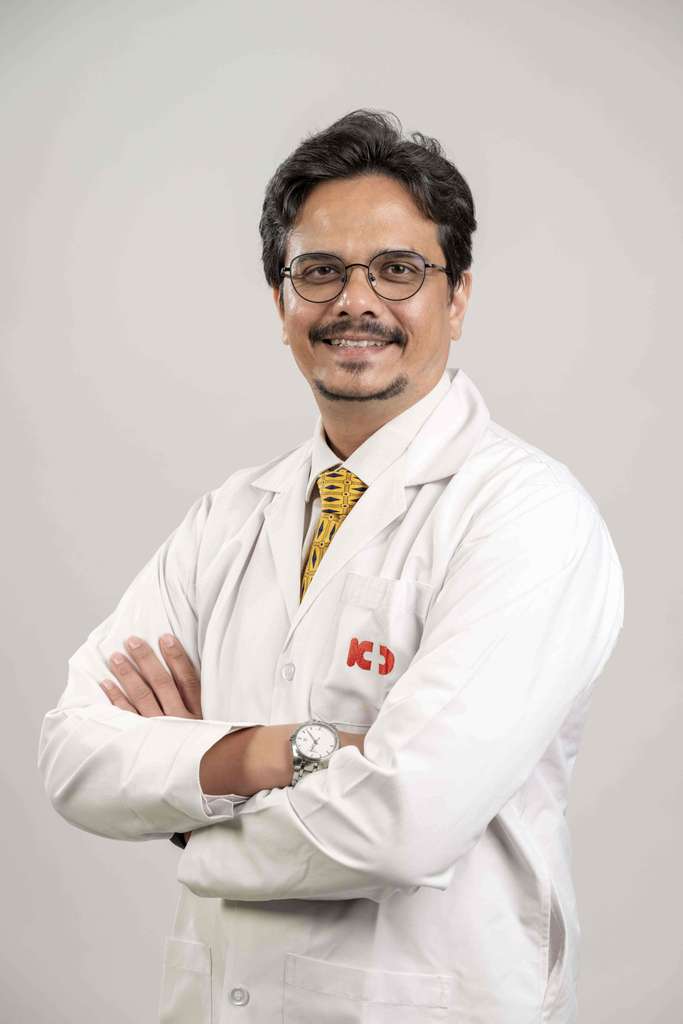
Dr Malhar Patel
Consultant, Radiation Oncology
Cancer rarely gives you a warning. It enters your life, turns your routine upside down, and fills your mind with questions.
If radiation therapy has just become part of your treatment plan, it is completely normal to feel a knot in your stomach.
Many of our patients sit in our chairs on day one. Say the same thing: “Doctor, I honestly do not know what to expect.”
We hear you, because there is one thing you need to know from the start: Radiation therapy patients are not walking this path alone.
Radiation Therapy is not about giant sophisticated machines. Radiation therapy is about connection. Radiation therapy is about trust, planning, unwavering safety and a team of people who stand by your side from your very first consultation to your final follow‑up. Every concern you have matters to us. Your comfort matters. Your healing matters.
Why Radiation Therapy Takes Time (Why that’s a good thing)
Some parts of cancer care move fast while other parts of cancer care seem to take a little longer. If things feel like they are moving in motion at times, know that every single delay is intentional. It is about your safety.
We do not just “see” with radiation therapy. We build your radiation therapy treatment plan like a bridge that has to hold steady day in and day out. While a machine delivers radiation, the real work starts long before you ever set foot in the treatment room.
Every scan, every calculation, every safety checks and every daily session matters.
At KD Cancer Centre, we refuse to rush cancer care. We do it right. We do it safely. We do it together with you.
Step‑by‑Step: What your journey actually looks like
We follow a specific pathway for every patient. Why? Because a consistent, rigorous system is the best way to eliminate errors and keep you safe at every single turn.
1. The first day: Welcome to our department
Your journey starts at registration. We verify your details. Open your medical record. It might feel like paperwork, but getting your identity right is the cornerstone of safe care.
2. Meeting your support team
You will meet friendly faces, but one of the most important people you will interact with right away is your clinical care officer (CCO).
At KD Cancer Centre, you see your CCO before you sit down with your Radiation Oncologist. Why? Because going into a doctor’s office can feel overwhelming. It is easy to forget the questions you spent all night worrying about. Your CCO sits with you, listens, takes down your history and makes sure your concerns are front and centre.
Once radiation therapy treatment starts, your CCO is your point of contact. If you start experiencing side effects, such as skin irritation, fatigue, a sore throat or trouble swallowing, you do not have to wait for your weekly doctor’s appointment. You can reach out to your CCO immediately. You never have to suffer in silence.
3. Customising your treatment plan
Next, you will meet your radiation oncologist. The Radiation Oncologist will sit down with you to understand your story, your lifestyle, your family situation, your health history and your body’s unique anatomy.
No two patients get the same plan because no two people are the same.
Bring a family member with you to this appointment. Cancer decisions feel lighter when they are shared. It helps to have an extra pair of ears in the room when we walk through the plan.
If your case is complex, it may be reviewed by our tumour board, a multi-speciality team of experts who collaborate to ensure you benefit from the insights of brilliant medical minds, rather than just one.
4. Clear guidance & financial transparency
After seeing your doctor, you will meet with our patient counsellor in a quiet space. The patient counsellor will break down the roadmap in plain everyday language:
* Which technique we’re using
* How many days the treatment will take
* What your daily schedule will look like
* Clear upfront cost estimates and insurance guidance
We keep discussions entirely separate from clinical decisions, so your medical care remains purely about your health. We also know that financial clarity brings peace of mind, and peace of mind helps you heal.
The Planning Phase: The Behind‑the‑Scenes Science
Before radiation therapy officially begins, our team does a lot of work behind the scenes. You will not see most of it. This is where your safety is locked in.
Immobilisation (Making position repeatable): We create custom support devices (like masks or cushions) in our dedicated radiation‑free mould room. This ensures your body is in the same position every single day, keeping radiation therapy treatment pinpoint‑accurate and protecting your healthy organs.
CT Simulation: You will get a planning scan (using a CT or PET‑CT scanner) that maps out your target treatment area.
The treatment planning system (TPS): Our radiation oncologists and medical physicists use these scans to map out the target tumour and calculate doses. They often work late into the night tweaking these plans until they are perfect.
Quality assurance (QA): Before your actual radiation therapy treatment, we run a “dummy” test of your plan. If it is not 100% accurate down to the millimetre, it does not get approved. Period.
The Treatment Phase: Daily Precision & Care
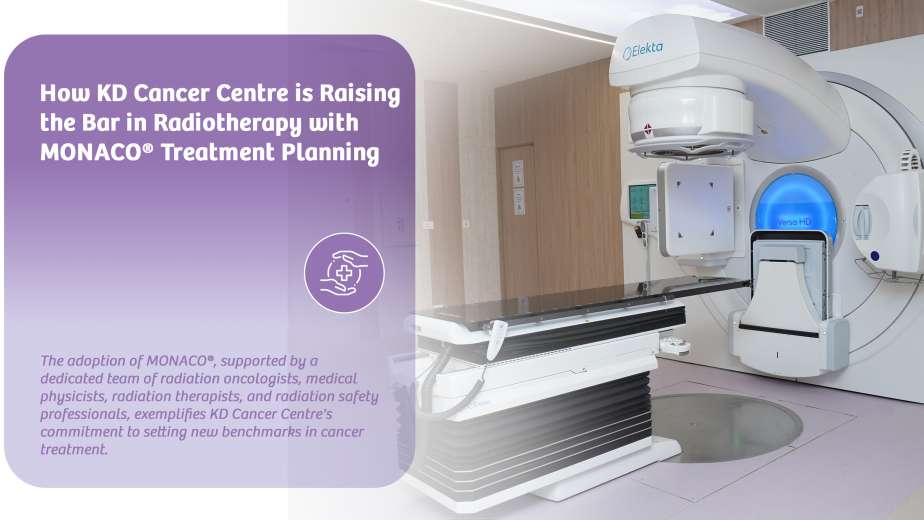
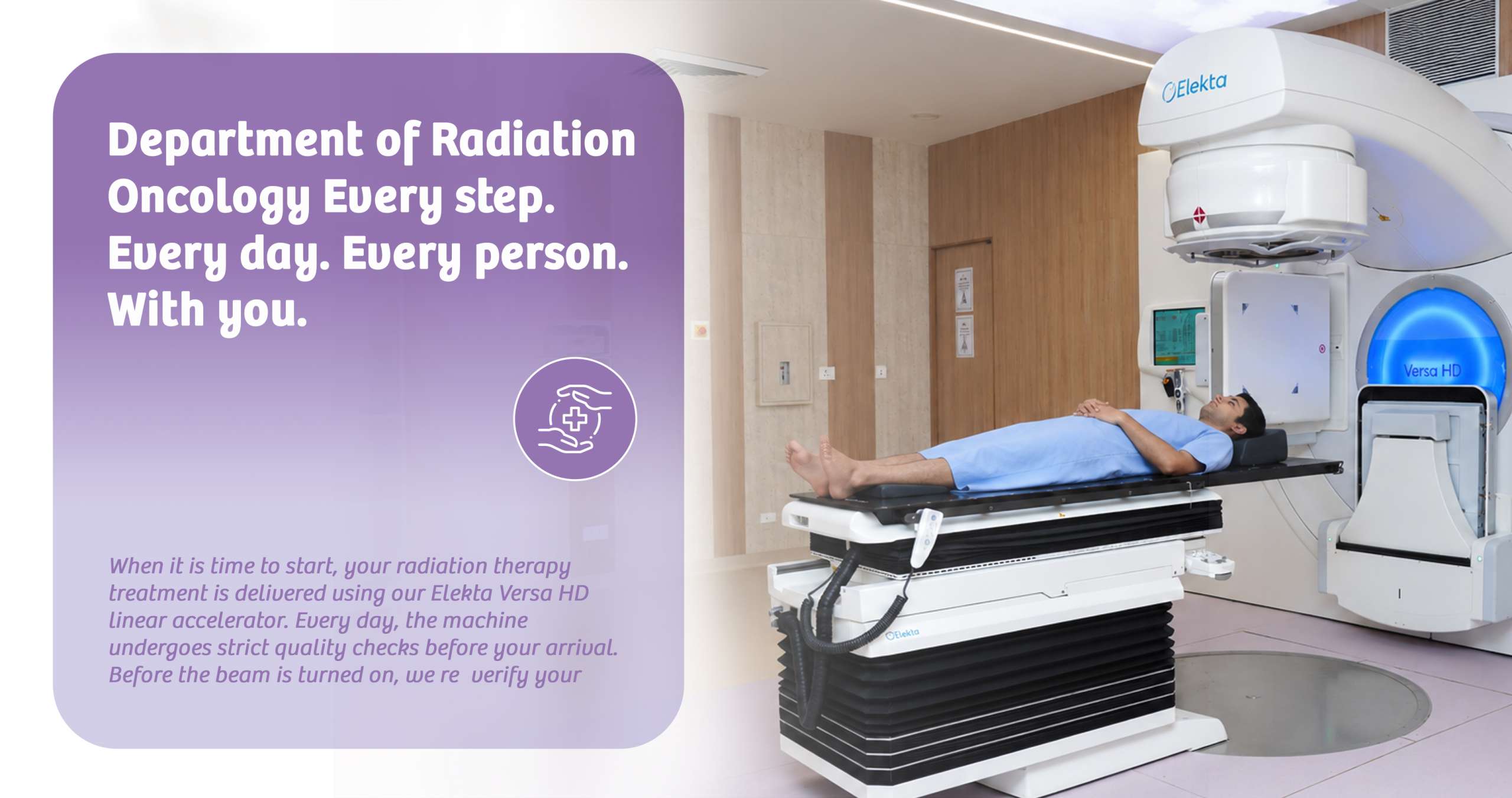
When it is time to start, your radiation therapy treatment is delivered using our Elekta Versa HD linear accelerator.
Every day, the machine undergoes strict quality checks before your arrival. Before the beam is turned on, we re‑verify your identity. Use advanced image guidance (IGRT) to double‑check your positioning.
While the machine is running, our Radiation Therapy Technologists monitor you continuously via CCTV and intercom. The actual radiation beam only takes a minute, even though the setup is meticulous.
You will visit us daily for your sessions. We know those daily trips can get exhausting. That is why we work hard to keep wait times low and make our clinic feel less like a cold hospital and more like a warm, welcoming place.