



By Dr Ashish Kaushal
Senior Consultant, Medical Oncology
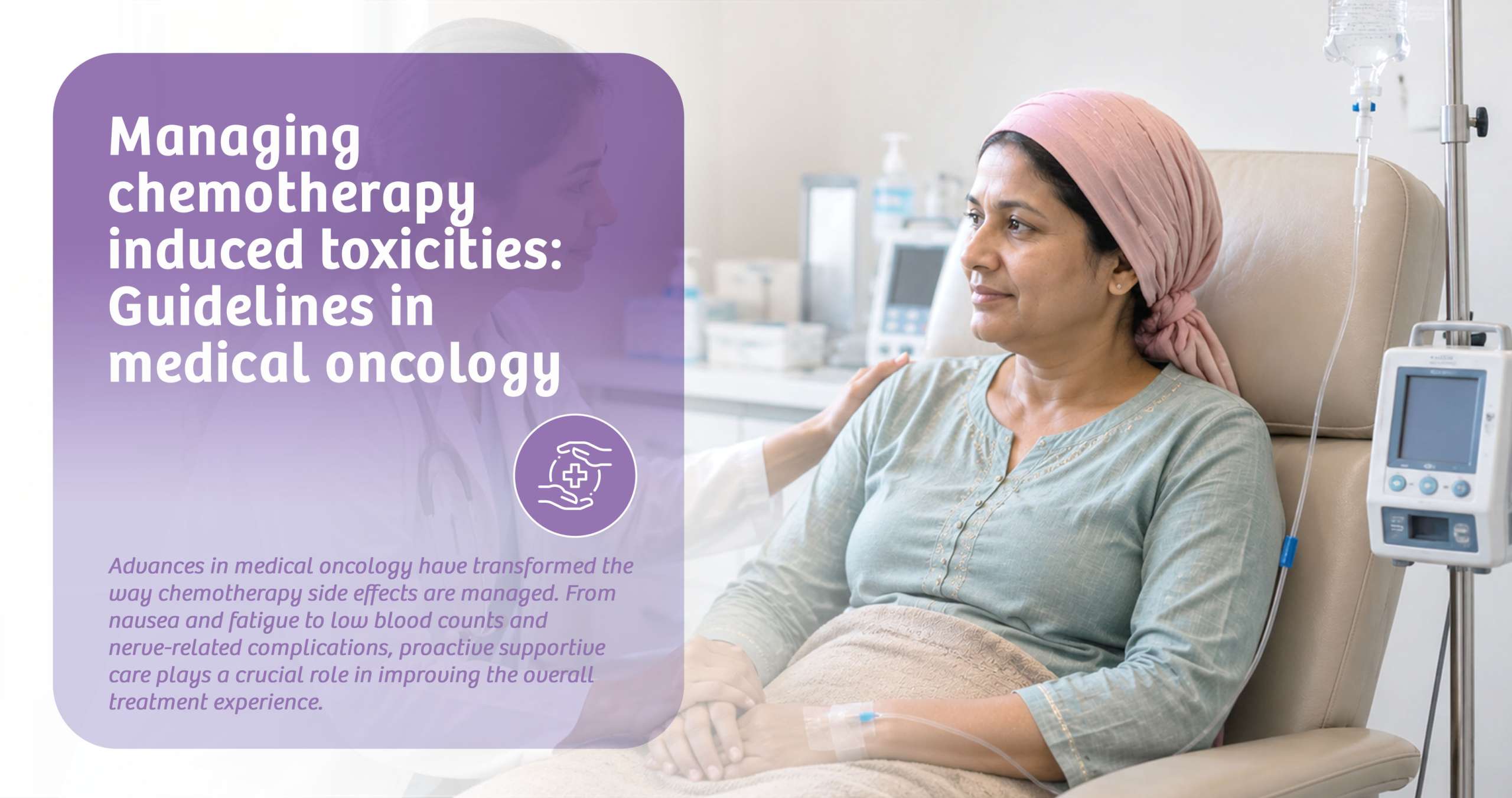
Chemotherapy remains one of the most effective weapons against cancer. It can shrink tumours, destroy cancer cells, and improve survival across many cancer types. However, along with its benefits, chemotherapy may also cause side effects known as chemotherapy-induced toxicities. These toxicities can affect various body systems, including the blood, digestive system, nerves, skin, kidneys, liver, and heart, as well as overall quality of life.
Modern medical oncology is not only about administering chemotherapy—it is equally about preventing, identifying, and managing treatment-related toxicities at an early stage.
At KD Cancer Centre, patients receive comprehensive cancer care where chemotherapy safety, symptom management, and personalised monitoring are central to treatment success.
What are Chemotherapy-Induced Toxicities?
Chemotherapy drugs target rapidly dividing cancer cells, but they can also affect healthy cells, such as those in the bone marrow, hair follicles, and the lining of the digestive tract. This may lead to side effects ranging from mild discomfort to serious medical complications.
Toxicities may be:
- Acute – occurring during or immediately after treatment
- Delayed – appearing days or weeks later
- Cumulative – worsening over multiple treatment cycles
- Organ-specific – affecting the nerves, kidneys, heart, liver, lungs, or other systems
Proper toxicity management helps reduce hospitalisations, treatment delays, dose reductions, and emergency complications.
Why Toxicity Management is Important
Effective toxicity control can
- Improve patient comfort and quality of life
- Prevent serious complications
- Maintain nutritional status and immunity
- Reduce emergency admissions
- Allow patients to complete planned treatment schedules
- Improve treatment outcomes
This is why supportive oncology care is now considered an essential pillar of modern cancer treatment.
Common Chemotherapy Toxicities and Guidelines for Management
1. Nausea and vomiting (CINV)
Chemotherapy-induced nausea and vomiting is one of the most feared side effects. Some drugs, such as cisplatin, have a high risk of causing severe nausea.
Guideline-based management
- Risk assessment based on chemotherapy regimen
- Preventive anti-nausea medicines before chemotherapy
- Combination therapy using serotonin antagonists, NK1 blockers, dexamethasone, or olanzapine in selected cases
- Hydration support
- Small, frequent meals
At KD Cancer Centre, antiemetic protocols are integrated into chemotherapy day care to keep patients comfortable.
2. Low Blood Counts (Myelosuppression)
Chemotherapy can suppress bone marrow, leading to
- Low white cells (neutropenia) – increased infection risk
- Low red cells (anaemia) – fatigue and weakness
- Low platelets (thrombocytopenia) – increased bleeding risk
Management
- Routine CBC monitoring
- Growth factor injections when indicated
- Infection precautions
- Blood transfusions when needed
- Dose adjustment or treatment delay if severe
Any fever during chemotherapy may be a medical emergency and needs urgent evaluation.
3. Fatigue
Cancer-related fatigue is common and may persist during treatment.
Recommended care
- Treat anaemia, thyroid imbalance, dehydration, pain, or depression
- Light exercise or walking if medically fit
- Nutritional support
- Sleep hygiene
- Energy conservation strategies
Even mild physical activity during treatment can reduce fatigue and improve well-being.
4. Diarrhoea and constipation
Some chemotherapy drugs irritate the intestines, causing diarrhoea, while anti-nausea medicines or reduced activity may cause constipation.
Management
For diarrhoea
- Oral fluids and electrolytes
- Early anti-diarrhoeal medication
- Temporary dietary modification
- Hospital care if severe dehydration occurs
For Constipation
- Adequate fluids
- Fibre, if appropriate
- Laxatives when prescribed
- Physical activity
Persistent diarrhoea must not be ignored, especially if associated with weakness or fever.
5. Mouth ulcers (Mucositis)
Chemotherapy may inflame the mouth and throat, causing pain and difficulty eating.
Management
- Good oral hygiene
- Saline or medicated mouth rinses
- Avoid spicy or acidic foods
- Pain-relieving gels or medicines
- Nutritional support if severe
Early treatment helps prevent infections and weight loss.
6. Hair loss
Hair loss can be emotionally distressing, although it is medically harmless.
Supportive Care
- Counselling before treatment
- Head coverings, scarves, or wigs
- Scalp cooling in selected patients
- Reassurance that hair regrowth usually occurs after treatment
At KD Cancer Centre, emotional support is considered just as important as physical care.
7. Peripheral Neuropathy
Certain chemotherapy drugs may damage nNrves, causing:
- Tingling
- Numbness
- Burning sensation
- Difficulty buttoning clothes or walking
Management
- Early symptom reporting
- Dose modification if symptoms progress
- Pain-relieving medicines when needed
- Physiotherapy and safety measures
Ignoring neuropathy may lead to long-term nerve damage.
8. Kidney and liver toxicity
Some chemotherapy medicines can affect kidney or liver function.
Monitoring Includes
- Blood tests before treatment cycles
- Hydration protocols
- Dose adjustment based on reports
- Avoiding unsafe self-medication
At KD Cancer Centre, organ function is routinely monitored before each treatment cycle.
9. Skin and nail changes
Patients may develop
- Dry skin
- Rashes
- Skin darkening
- Brittle nails
Care Tips
- Use gentle moisturisers
- Sun protection
- Avoid harsh chemicals
- Dermatology referral if severe
Red Flag Symptoms During Chemotherapy
Patients should contact their oncology team immediately if they develop
- Fever
- Breathing difficulty
- Severe vomiting
- Persistent diarrhoea
- Bleeding
- Confusion
- Reduced urine output
- Sudden weakness
- Chest pain
Prompt action can prevent serious complications.
Personalised Oncology Care at KD Cancer Centre
Chemotherapy toxicity management is not one-size-fits-all. Age, cancer type, previous illnesses, kidney function, nutritional status, and treatment regimen all influence side effects.
Patients Benefit From
- Experienced medical oncologists
- Advanced chemotherapy day care
- Evidence-based supportive care protocols
- Regular blood monitoring
- Nutrition guidance
- Emergency response systems
- Multidisciplinary cancer team care
- Personalised dose planning
This helps patients continue treatment with greater safety and confidence.
Tips for Patients Receiving Chemotherapy
- Keep a symptom diary
- Drink adequate fluids unless restricted
- Eat balanced, small meals
- Maintain hygiene
- Avoid crowds during low-immunity periods
- Take medicines exactly as prescribed
- Report side effects early
- Never self-medicate without an oncologist’s advice
In a nutshell
Managing chemotherapy-induced toxicities is a critical part of successful cancer treatment. With modern guidelines, proactive monitoring, preventive medications, and timely intervention, many side effects can be controlled effectively.
At KD Cancer Centre, chemotherapy is delivered with a strong focus on safety, comfort, and continuity of care. When toxicities are managed well, patients are better able to complete treatment and focus on recovery.
FAQs
1. Are chemotherapy side effects the same for every patient?
No. Side effects vary depending on the type of chemotherapy drug, dosage, duration of treatment, age, overall health, and individual response.
2. Can chemotherapy toxicities be prevented?
Many chemotherapy-related toxicities can be reduced or prevented with proper planning, preventive medicines, monitoring, and personalised dose adjustments.
3. When should I contact my doctor during chemotherapy?
Contact your oncology team immediately if you develop fever, severe vomiting, diarrhoea, unusual bleeding, breathing difficulty, chest pain, confusion, or extreme weakness.
4. Will chemotherapy side effects stop after treatment ends?
Many side effects improve gradually after treatment is completed. Some effects may take longer and require follow-up care.
5. How does KD Cancer Centre help manage chemotherapy side effects?
KD Cancer Centre offers expert medical oncologists, advanced chemotherapy day care, routine monitoring, supportive medications, nutritional guidance, and personalised care plans to help patients continue treatment safely and confidently.
