
By Dr Margi Hirapara
Consultant Oncoplastic & Breast Surgery
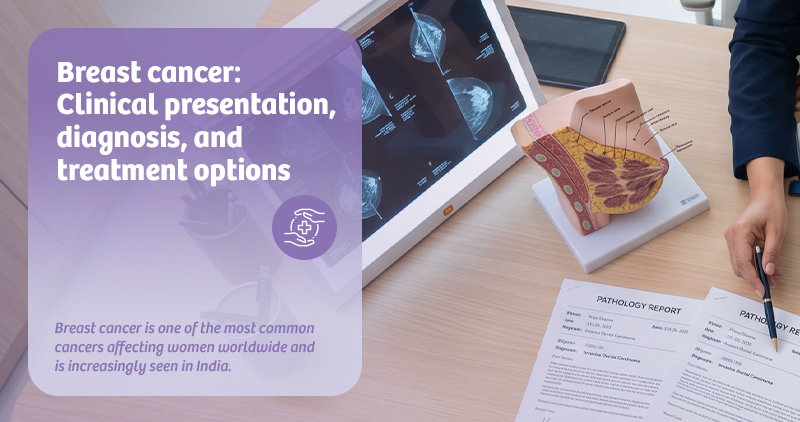
Breast cancer is one of the most common cancers affecting women worldwide and is increasingly seen in India. Early diagnosis, modern imaging, personalised treatment planning, and multidisciplinary care have significantly improved survival outcomes. Today, many women with breast cancer can receive effective treatment while preserving quality of life, confidence, and long-term health.
At KD Cancer Centre, patients are beneficial for comprehensive breast cancer care that includes screening, accurate diagnosis, advanced surgery, chemotherapy, radiation therapy, targeted therapy, and modern minimally invasive options such as VABB & lymphedema preventive surgery, such as LYMPHA, ARM robotic surgery in selected cases.
Breast cancer develops when abnormal cells in the breast grow wildly and form a tumour. It may begin in
Understanding breast cancer
- Milk ducts
- Lobules
- Surrounding breast tissue
Some breast cancers grow slowly, while others may be more aggressive. Early detection remains one of the most important factors influencing treatment success.
Who is at risk?
Breast cancer can affect anyone, though it is more common in women. Risk factors include
- Increasing age
- Family history of breast or ovarian cancer
- Inherited gene mutations such as BRCA1 or BRCA2
- Early menstruation or late menopause
- Obesity
- Alcohol consumption
- Lack of physical activity
- Previous breast disease
- Late first pregnancy
- Inadequate exclusive breastfeeding
- Hormonal factors such as the use of hormone replacement therapy & long term use of COP
Clinical Presentation: Signs and Symptoms
Breast cancer may present in different ways. Common warning signs include
- A lump in the breast or underarm
- Change in breast size or shape
- Skin dimpling or puckering
- Nipple inversion
- Nipple discharge, especially blood-stained, single duct, spontaneous
- Redness or thickening of breast skin
- Persistent breast pain or discomfort
- Swelling in the armpit
- Non-healing skin lesion over the breast
Some women may have no symptoms, and the cancer may only be detected on screening mammography.
Importance of Screening and Early Detection
Routine screening helps detect breast cancer before symptoms appear.
Common screening tools
- Mammography with tomosynthesis (Only approved method for mass screening)
- Digital mammography
- Breast ultrasound
- Breast MRI in selected high-risk women
- Clinical breast examination
- Self-awareness of breast changes
At KD Cancer Centre, breast screening programmes support early diagnosis and timely treatment planning.
Diagnosis of Breast Cancer
When an abnormality is suspected, doctors may recommend a combination of tests.
1. Clinical examination
A breast specialist examines the lump, skin changes, and lymph nodes.
2. Imaging
- Digital mammography
- Ultrasound
- MRI Breast (selected cases)
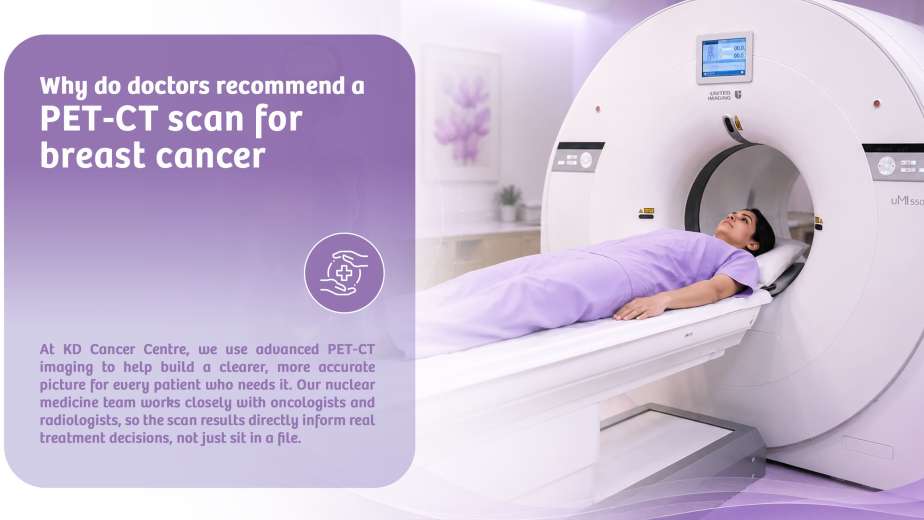
- PET-CT in specific staging situations
A biopsy confirms the diagnosis by removing tissue for laboratory testing. Types may include
3. Biopsy
- Core needle biopsy
- Vacuum-assisted biopsy
- FANC from nodes
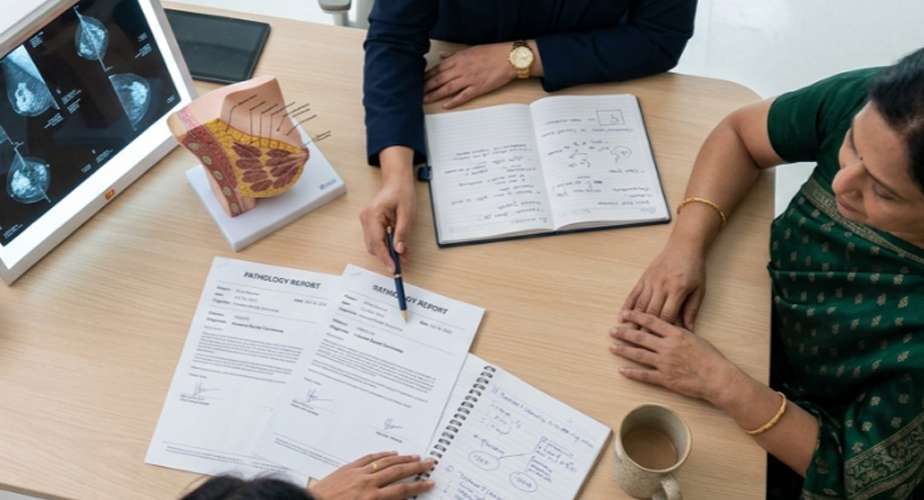
4. Pathology & biomarker testing
Important tests include
- Tumour type
- Grade
- Hormone receptor status (ER/PR)
These results help personalise treatment.
Staging of breast cancer
Staging determines how far the cancer has spread and helps guide treatment.
Stages are based on
- Tumour size
- Lymph node involvement
- Spread to other organs
Early-stage breast cancer often has excellent outcomes with proper treatment.
Treatment options for breast cancer
Treatment depends on stage, tumour biology, age, general health, and patient preference. A multidisciplinary team usually creates an individualised plan.
1. Surgery
Surgery remains a key treatment option.
Types of breast surgery
- Breast-Conserving Surgery (Lumpectomy) – removal of tumour with margin
- Mastectomy – removal of the breast
- Sentinel lymph node biopsy
- Axillary Surgery when required
- Breast Reconstruction in selected patients
- Lymphedema preventive surgery
Robotic Surgery in Breast Cancer
In selected patients, Da Vinci Surgical System robotic-assisted surgery may be considered for certain breast cancer and reconstructive procedures where clinically appropriate.
Potential advantages may include
- Smaller incisions in selected techniques
- Greater surgical precision
- Enhanced visualisation
- Reduced tissue trauma in selected cases
- Improved cosmetic outcomes in suitable patients
- Faster recovery in some patients
Suitability depends on the type and stage of cancer, individual anatomy, and the surgeon’s clinical assessment.
2. Chemotherapy
Chemotherapy may be given
- Before surgery (neoadjuvant) to shrink the tumour or downstage
- After surgery (adjuvant) to reduce recurrence risk
- For advanced or metastatic disease
3. Radiation Therapy
Radiation therapy is commonly recommended after breast-conserving surgery and in selected post-mastectomy patients.
It helps reduce local recurrence risk.
4. Hormone Therapy
Hormone receptor-positive cancers may be treated with medicines.
These reduce the effect of oestrogen on cancer cells.
5. Targeted Therapy
HER2-positive cancers may benefit from anti-HER2 targeted medicines.
6. Immunotherapy
Some selected triple-negative breast cancers may be eligible for immunotherapy.
Personalised Breast Cancer Care at KD Cancer Centre
Modern breast cancer treatment is highly personalised. Care may involve
- Surgical oncologists
- Medical oncologists
- Radiation oncologists
- Radiologists
- Pathologists
- Breast care nurses
- Physiotherapists
- Counsellors
- Reconstructive surgeons
- Genetic counsellors
- Psychologist
This team-based model helps deliver coordinated treatment with emotional and physical support.
Life after treatment
Many women return to healthy, active lives after treatment. Recovery support may include
- Follow-up: Clinical encounter with appropriate testing
- Lymphedema preventive measures
- Physiotherapy
- Nutrition guidance
- Emotional counselling
- Survivorship planning
- Regular check-ups
When to see a doctor
Seek medical advice promptly if you notice
- Any new breast lump
- Nipple discharge
- Persistent breast skin changes
- Underarm swelling
- Ongoing unexplained breast pain
- Sudden change in breast appearance
Why early action matters
Many breast cancers have significantly improved outcomes when diagnosed at an early stage. Delaying evaluation can allow disease progression.
Conclusion,
Breast cancer is treatable, and in many cases, highly curable when detected early. Advances in imaging, pathology, personalised medicines, breast-conserving techniques, and robotic technology have transformed outcomes.
At KD Cancer Centre, patients receive comprehensive breast cancer care, from screening and diagnosis to surgery, chemotherapy, radiation, and advanced options such as da Vinci surgical system robotic-assisted surgery in selected cases.
FAQs
1. Can breast cancer be cured?
Yes, Many early-stage breast cancers can be treated successfully, and cure rates are high when diagnosed early.
2. Is every breast lump cancer?
No. Many breast lumps are benign, but every new lump should be evaluated.
3. Is robotic surgery possible for breast cancer?
Certain patients may qualify for robotic-assisted procedures based on their clinical suitability.
4. Is breast removal always necessary?
No. Many patients are eligible for breast-conserving surgery depending on tumour size and location.
5. Does KD Cancer Centre offer complete breast cancer care?
Yes, KD Cancer Centre offers comprehensive screening, diagnosis, surgery, oncology treatment, and personalised breast cancer management.