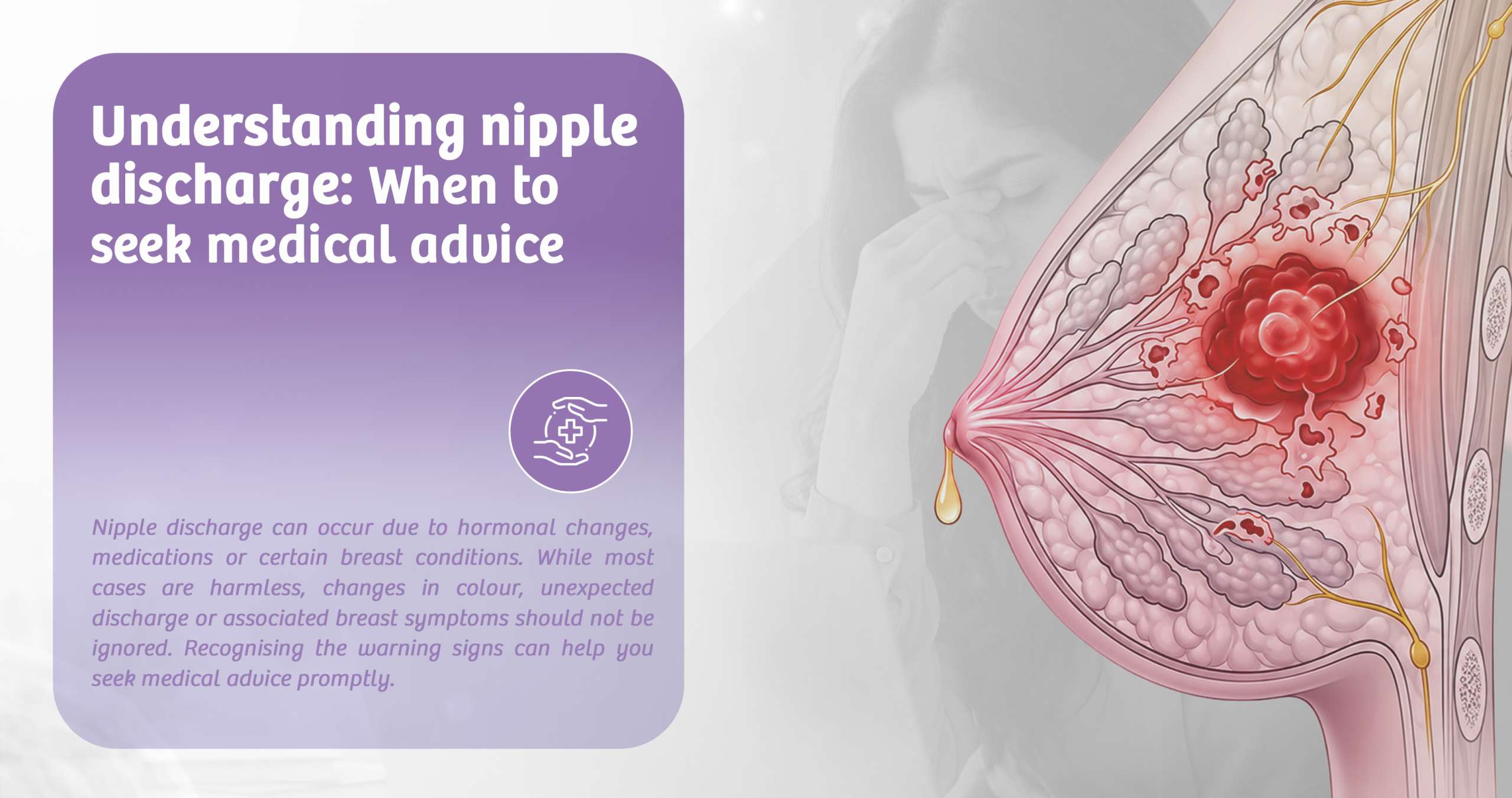

A 50-year-old woman became worried when she noticed a damp spot on her bra, which was quite noticeable.
It was hard to believe, so she rushed to see an oncologist, thinking she might have breast cancer. The oncologist reassured her, telling her to take a deep breath and explaining that not all nipple discharge is a sign of cancer. Often, it can be due to hormonal changes, changes in certain medications, or, in some cases, a small, non-cancerous growth in the milk ducts. She was given a clear explanation of why this was happening. I think this experience is common among many women.
Let me explain what is normal and when you should be concerned.
First, let us look at the common, usually harmless causes of discharge.
Keep an eye on following pointers and keep a track:
• Coming from both breasts, often from several ducts at once
• Only there when you squeeze or stimulate the nipple
• Milky, white, green, yellow, brown or even blackish in colour
• Linked to something obvious, such as recent pregnancy or breastfeeding, a new medication, stress, or an underactive thyroid
A few common causes
• Galactorrhea, a milky discharge comes even when you are not pregnant or lactating. It can be triggered by high prolactin, thyroid problems, or medications (some antidepressants, antipsychotics, blood pressure drugs and hormonal contraceptives).
• Duct ectasia, where milk ducts widen and thicken, usually around perimenopause. It can cause sticky green, brown or grey discharge.
• Hormonal changes, including pregnancy, which can leave small amounts of discharge for months, even after a baby is weaned.
• Irritation or infection, such as from friction, tight workout gear, or mastitis.
These still deserve a mention at your next doctor visit, especially if they bother you. They just are not usually urgent.
The red flags
Here is what should push you to book an appointment soon, rather than wait and see.
1. Bloody or blood-tinged discharge. Nipple discharge that appears pink, red, rusty or reddish-brown may contain blood and should be evaluated. The most common cause is an intraductal papilloma, a small non-cancerous growth inside a duct. But bloody discharge can occasionally be linked to cancer, so it needs to be looked at.
2. Clear, watery discharge from one breast. Clear fluid that looks like water or thin egg white, especially from a single duct, is easy to dismiss because it is not dramatic. Do not dismiss it.
3. Discharge that comes out on its own. Does the fluid leak on its own, without you pressing the nipple? This is called spontaneous discharge and warrants more attention than discharge that occurs only when squeezed.
4. Discharge from just one breast, or one duct. Hormonal and medication-related causes usually affect both sides. When it is only one nipple, and especially one opening, doctors pay closer attention.
5. A lump, thickening or other breast changes. Nipple discharge accompanied by a new lump in the breast or armpit, skin dimpling, redness, a newly inverted nipple, crusting or scaling of the nipple skin, or swelling warrants prompt medical evaluation.
6. Discharge that keeps coming back. If it clears up and returns again and again, get it examined rather than hoping it goes away for good.
7. Any discharge after menopause. Hormones are quieter at this stage, so new discharge deserves more attention.
8. Any discharge in men. Nipple discharge is uncommon in men, so it should always be evaluated.
One more thing worth saying: bloody or clear discharge in a pregnant woman can also happen and is often benign, but it should still be mentioned to your doctor or midwife.
Quick colour guide
| Colour | What it often means | Urgency |
| Milky white | Hormones, medications, galactorrhea | Low, mention to your doctor |
| Green, brown, grey, black | Duct ectasia, fibrocystic changes | Low to moderate |
| Yellow or pus-like | Infection or abscess, especially with pain, redness, fever | Prompt, same week |
| Clear and watery (one side) | Papilloma, rarely cancer | Get checked soon |
| Pink, red or bloody | Papilloma most often, occasionally cancer | Get checked soon |
Colour alone cannot give a diagnosis. It is the combination of colour, side, whether it is spontaneous, and other symptoms that matters.
What to expect at the doctor?
It is usually less scary than people imagine. A typical work-up may include:
• A clinical breast exam and questions about your medications, pregnancies and history
• A mammogram and/or breast ultrasound (ultrasound is often used for younger women)
• Sometimes MRI, or testing a sample of the fluid
• Blood tests, such as prolactin and thyroid levels, if milky discharge is suspected to be hormonal
If a papilloma is diagnosed, a minor surgical procedure may be recommended to remove it, depending on the clinical findings.
What you can do in the meantime
• Do not squeeze or pump to “check”. Repeatedly expressing fluid can make the nipple irritated and keep the discharge going.
• Make a note. Jot down the colour, which breast, how often it happens, and whether it was spontaneous. Your doctor will find it very useful.
• List your medications and supplements, including herbal ones.
• Wear a soft breast pad if it is leaking, and change it often.
• Skip the self-diagnosis spiral. Searching at 2 AM rarely helps. A real exam does.
Conclusion,
Most nipple discharge is benign. If the discharge is bloody, clear and watery, occurs on its own, affects only one breast, or is accompanied by a lump or skin changes, seek medical advice promptly. When in doubt, get it checked. A timely visit can offer peace of mind and help identify any problem that needs treatment.